TEACHING & PEDAGOGY
TEACHING PHILOSOPHY
Education is a transformative tool, capable of fostering both intellectual and personal growth. It empowers students to think critically, adaptively, and develop their own intellectual rigor, ultimately enabling them to meaningfully engage with the visual world. As educators, our role is to challenge students and provide them with the tools, perspectives, and technical skills they need to discover what matters most to them and to guide them toward becoming engaged, thoughtful contributors to our culture.
In Visual Design and Digital Art, education plays a crucial role in the interdisciplinary dialogues of design, art, technology, and communication. These fields hold the potential to advance society or, when misused, to contribute to cultural degradation. Graphical storytelling and interactive design can shape public consciousness and has the power to amplify marginalized narratives, foster empathy, and drive social change.
My teaching philosophy emphasizes the importance of linking creative practice with cultural analysis and social responsibility. I blend conceptual theory with technical training, encouraging students to explore the ethical and social implications of visual communication. This is especially vital in today’s media-saturated, algorithmically shaped environment where content can circulate globally in seconds and where digital creators bear increasing influence. Even in courses focused on production, I challenge students to consider not only how something is made, but why and for whom.
Much of my teaching centers on creating a safe and inclusive environment for experimentation, collaboration, and failure. Students are introduced to modern and contemporary practitioners, theoretical texts, and client-based scenarios. Through critiques, project development, and hands-on workshops, they learn to build narratives that are both personally meaningful and globally relevant. I implement this through individual mentorship, team-based design, and interdisciplinary collaboration. I have taken students abroad and led experiences exploring visual symbolism and cultural identity, connecting the classroom with the real-world.
Students learn best through purposeful action. While mimicking may have a place at the foundational level, it is not enough to stimulate meaningful intellectual growth. I encourage process over perfection, and I view the classroom as a space for building confidence, voice, and critical perspective. By the end of the semester, I want students to not only have gained skills but to see themselves as agents of change: artists, designers, and thinkers with the ability and responsibility to shape the world around them.
COURSES TAUGHT
Advanced Design Studios
Advanced Typography
Advanced Web Design & Development
Creative Coding
Digital Foundations
Digital Media
Digital Photography
Game Design & Development
Portfolio
Project Management
Information Design
Introduction to Digital Audio
Motion Graphics
Senior Capstone
Visual Communications
Web Scripting
TEACHING IN PRACTICE
OVERVIEW
Across my appointments at La Salle University, Kutztown University, and the University of Maryland Global Campus, I have taught students to build technically sound work and to think like designers: human-first, system-aware, and visually strategic. The student work shown here is organized around the competencies I teach across foundational and advanced courses: systems thinking, design research, prototype & iteration, typography & visual language, and brand identity & creative direction. Each section pairs an example of my approach with the kinds of outcomes students produce when those approaches land.
SYSTEMS THINKING
I structure courses as modular learning arcs inspired by agile design sprints and iterative critique cycles. In web design, projects scaffold from hand-coded HTML/CSS through responsive systems to CMS-based platforms. In game design, students move through interaction logic, narrative development, and spatial design in Unity 3D, learning to think of games as systems of meaning rather than collections of assets. Across both tracks, the goal is the same: design as a way of building structures that hold up under iteration.


Sample Brief:
“Completely redesign the website for Sam’s Hope, a nonprofit dedicated to keeping older adults and their pets together. The current site doesn’t serve the organization’s mission well and your job is a 5-page redesign that does. Conduct competitive research, write 3 user personas grounded in who actually visits a site like this (older adults, family caregivers, potential donors), and draft a 500-word proposal defending your redesign. Prototype the full site in Figma with all images, text, and internal links.“
DESIGN RESEARCH
Students learn to use research as a generative practice by exploring ideas through formal inquiry, visual experimentation, and conceptual development before arriving at a solution. Assignments push students past the first idea, the first reference, and the first sketch toward a deeper question about what the work is for and who it speaks to. This approach equips students to defend their decisions in critique and translates directly into the more rigorous design practice expected at the professional level.

Sample Brief:
“Taking a brisk walk down the street, you noticed a sign taped on a lamp post. “Garage Sale this Saturday!” Perfect, you think, I’ve been meaning to get new dishes. But wait a minute! That garage sale was last Saturday; you missed it! Well not anymore, with the new garage helper app, called _____________! With this app, you can shop in virtual garage sales throughout the city, state, and even country! Not only can you browse through items for sale in local garage sales, but you can complete the buying experience online as well. You get the items you need, at cheap garage sale prices, without ever leaving the confront of your home!“


PROTOTYPE & ITERATION
Prototyping is taught as iterative thinking: testing, refining, and evolving ideas through multiple cycles toward human-centered design solutions. Students build and rebuild, learning that the first version of anything is a draft and that iteration is not a sign of failure but a mark of professional practice. Critiques are structured to make iteration visible: students show their process, defend their pivots, and learn to read failure as data rather than as setback.


SAMPLE BRIEF:
“Working in groups of 2-3, prototype a useless gadget based on the Japanese concept of Chindogu. You will prototype the useless gadget together, using Adobe Photoshop. Please create at least 2 different views of the product (e.g. top-down and side view) and one “product shot” using a person. After creating the useless gadget, you will now work individually and create an advertisement for it. Ad must contain: product image(s), background image or illustrative/graphic elements, “business” logo and name, contact information, a tagline, body copy, and a call to action. Make sure the FUNCTION of the gadget is clear, through both imagery and text.”
TYPOGRAPHY & VISUAL LANGUAGE
Typography is taught as both expressive medium and structural tool. Students study letterforms as carriers of voice, hierarchy, and cultural meaning. Assignments move from foundational mechanics (kerning, leading, scale) into expressive territory where type becomes argument, mood, and identity. Students learn that typography is never neutral: every choice of typeface, size, and arrangement is a position the designer takes about what matters and who is being spoken to.

SAMPLE BRIEF:
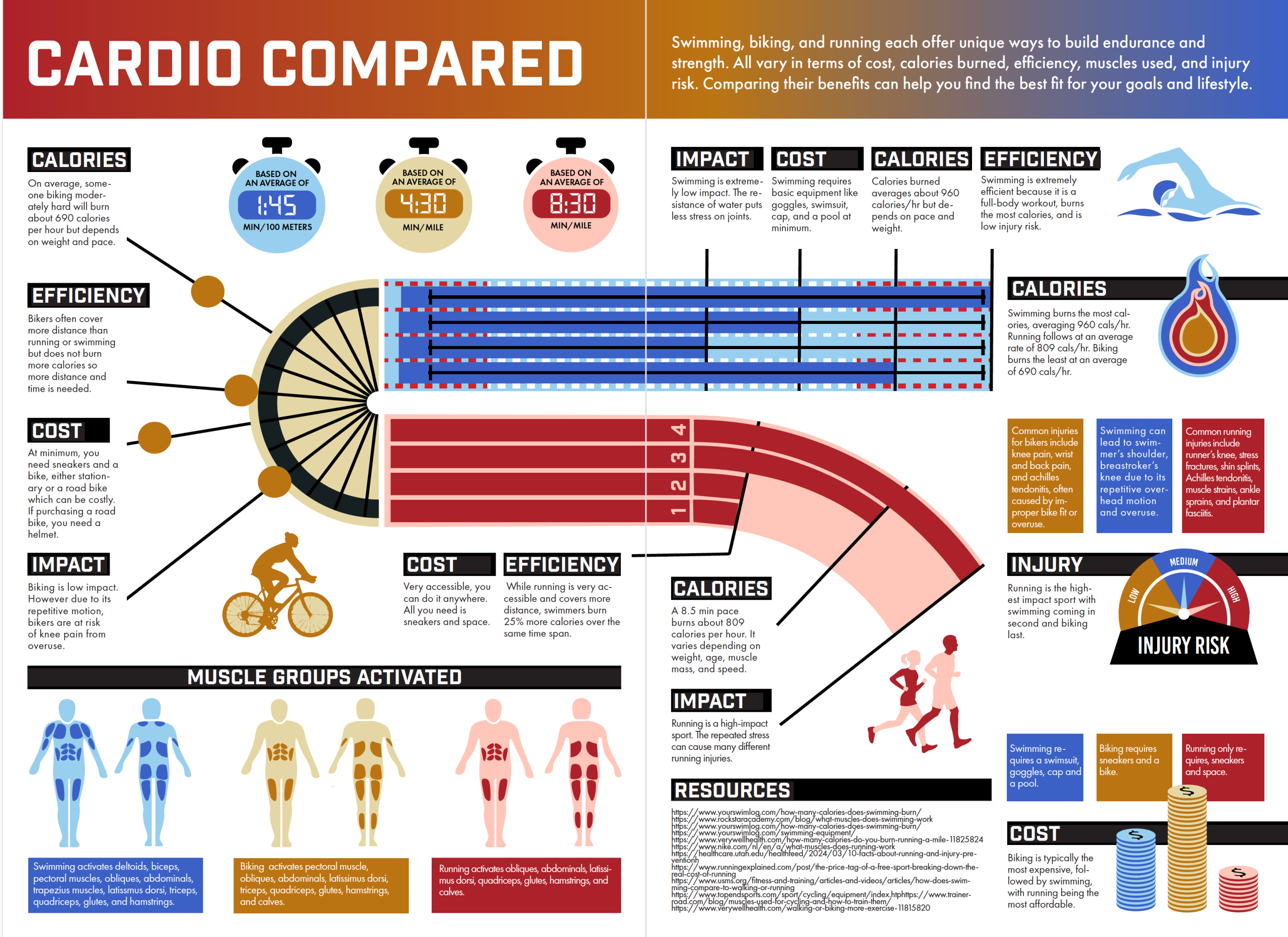
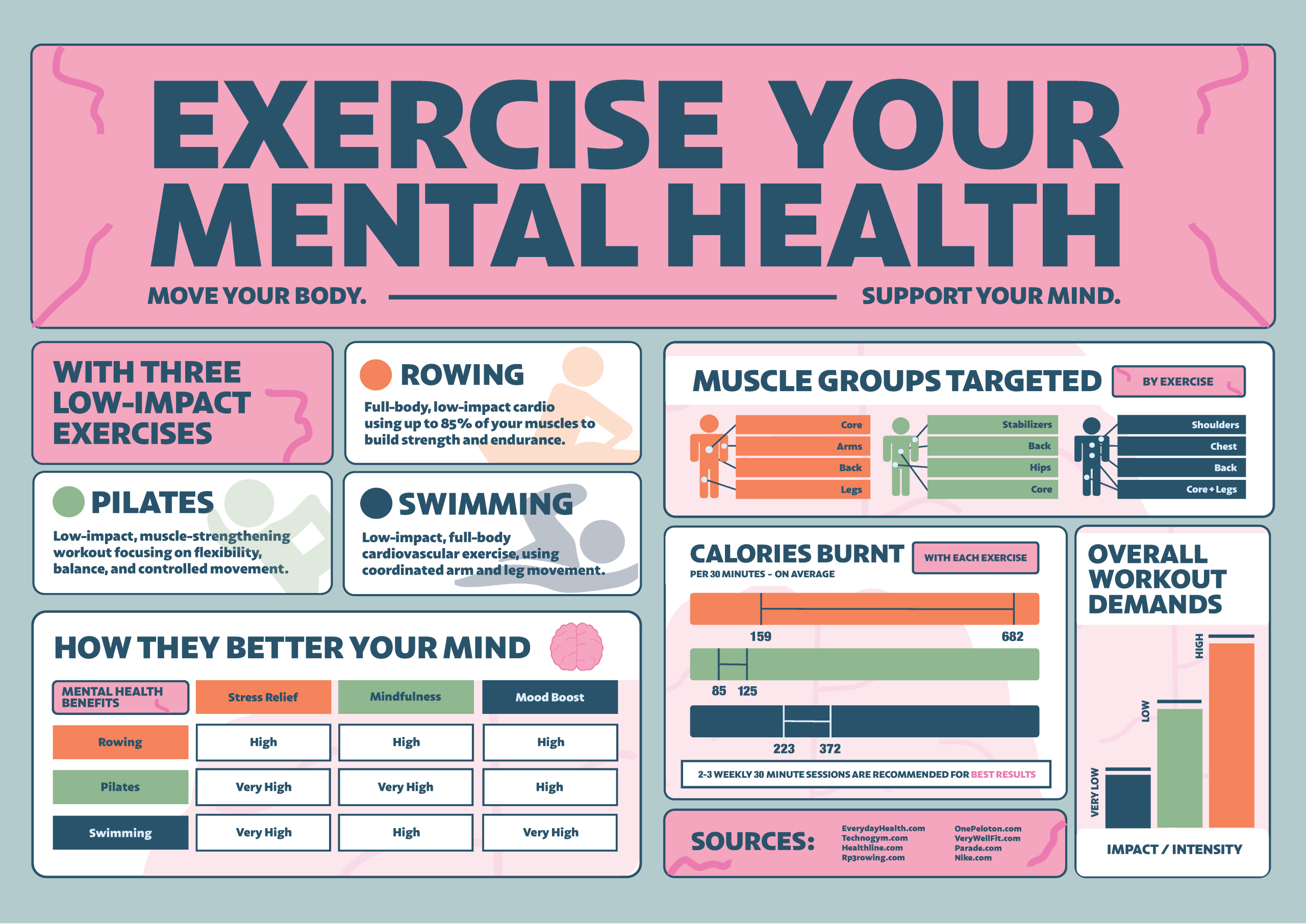
“Design a 2-page comparative infographic spread analyzing 3–5 types of exercise across at least 5 measurable categories (calories burned, cardiovascular impact, muscle activation, injury risk, cost, time efficiency, etc.). Page 1 establishes the high-level comparison system; page 2 expands into detailed visualizations. Create at least 4 original Illustrator visualizations with consistent scales, clear labels, cited sources, and no photographs. Final spread: 13 × 19 inches per page, laid out in InDesign. Submit process documentation (research, thumbnails, grid planning) alongside the final.”


BRAND IDENTITY & CREATIVE DIRECTION
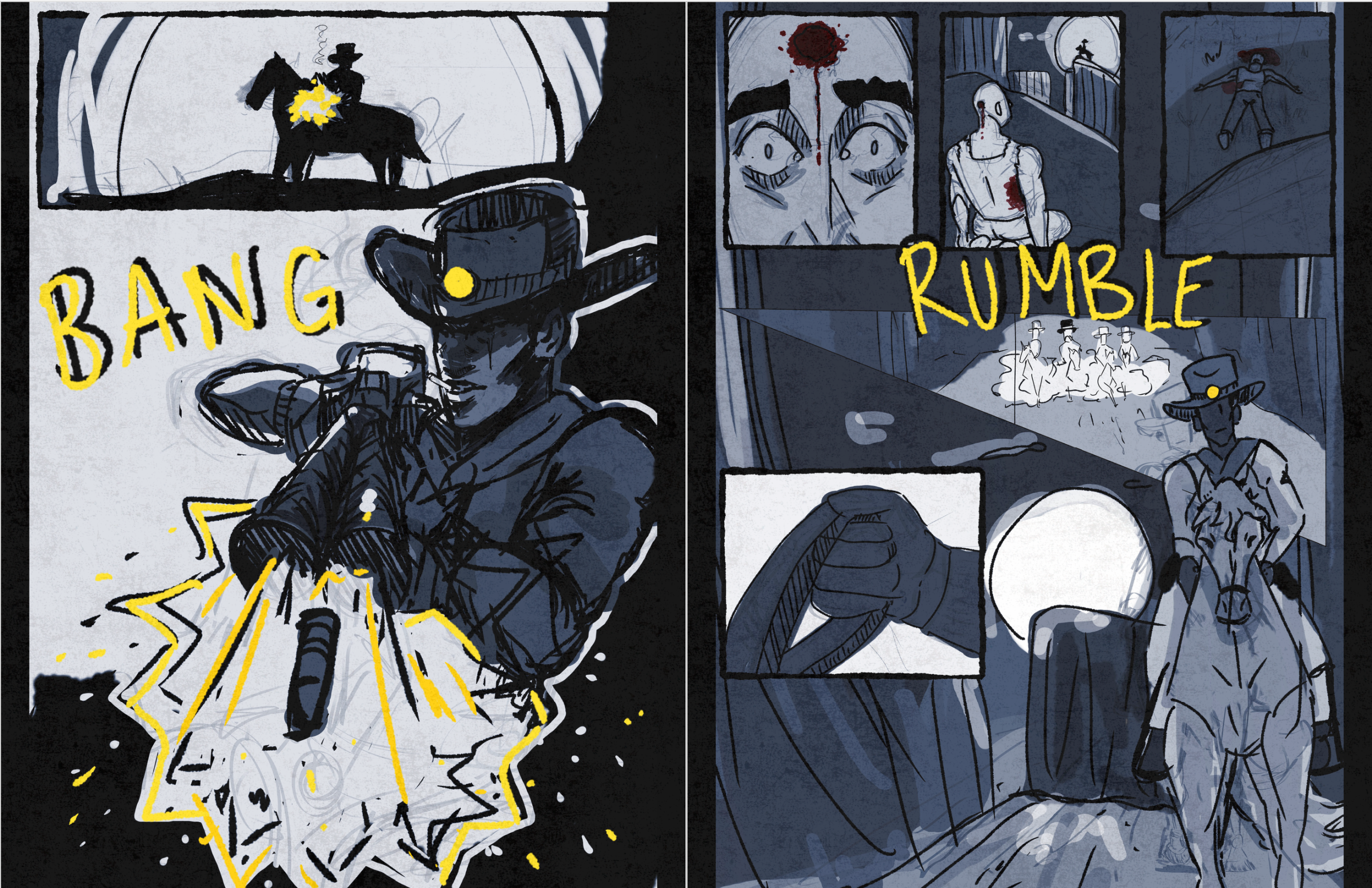
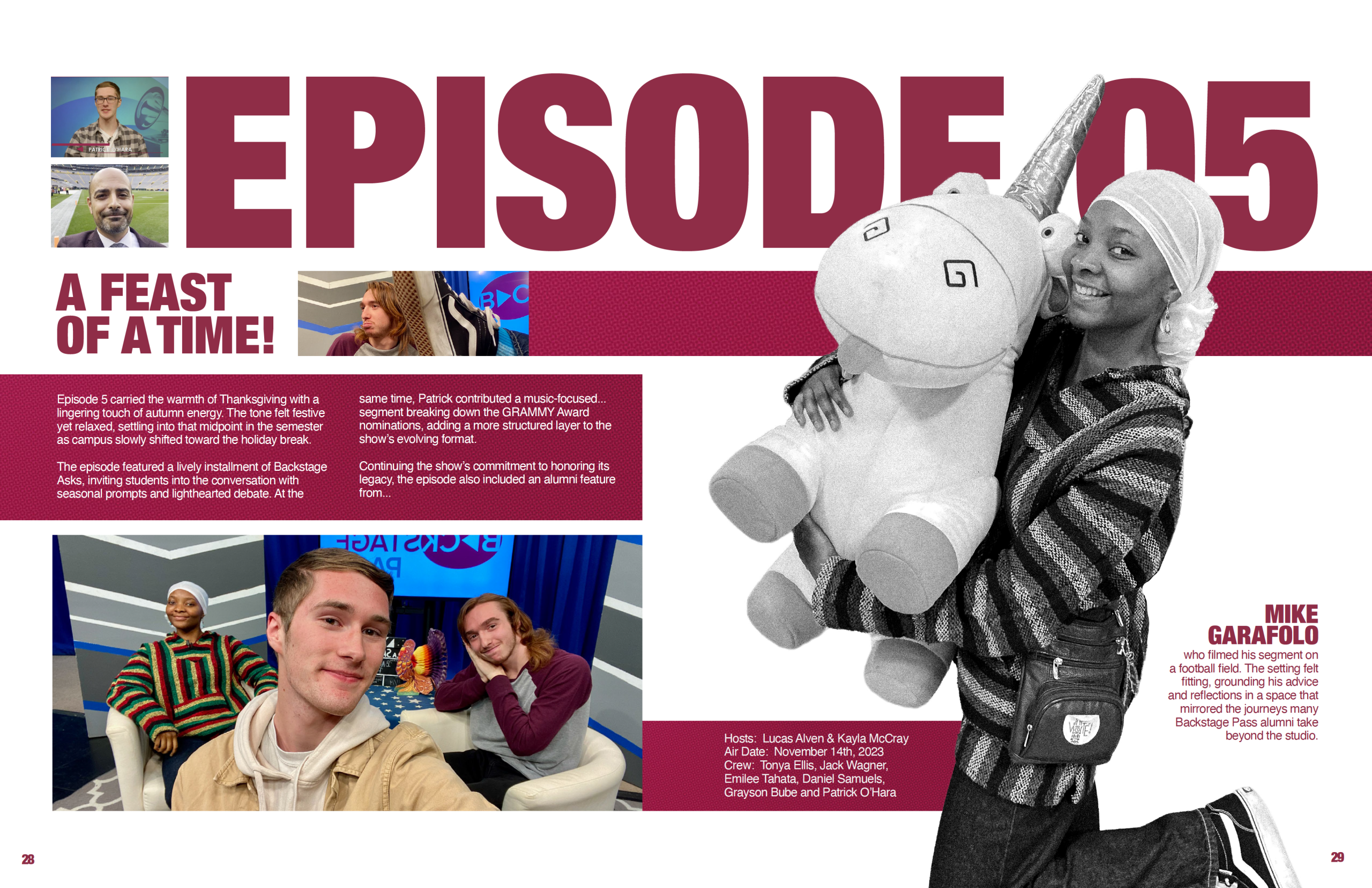
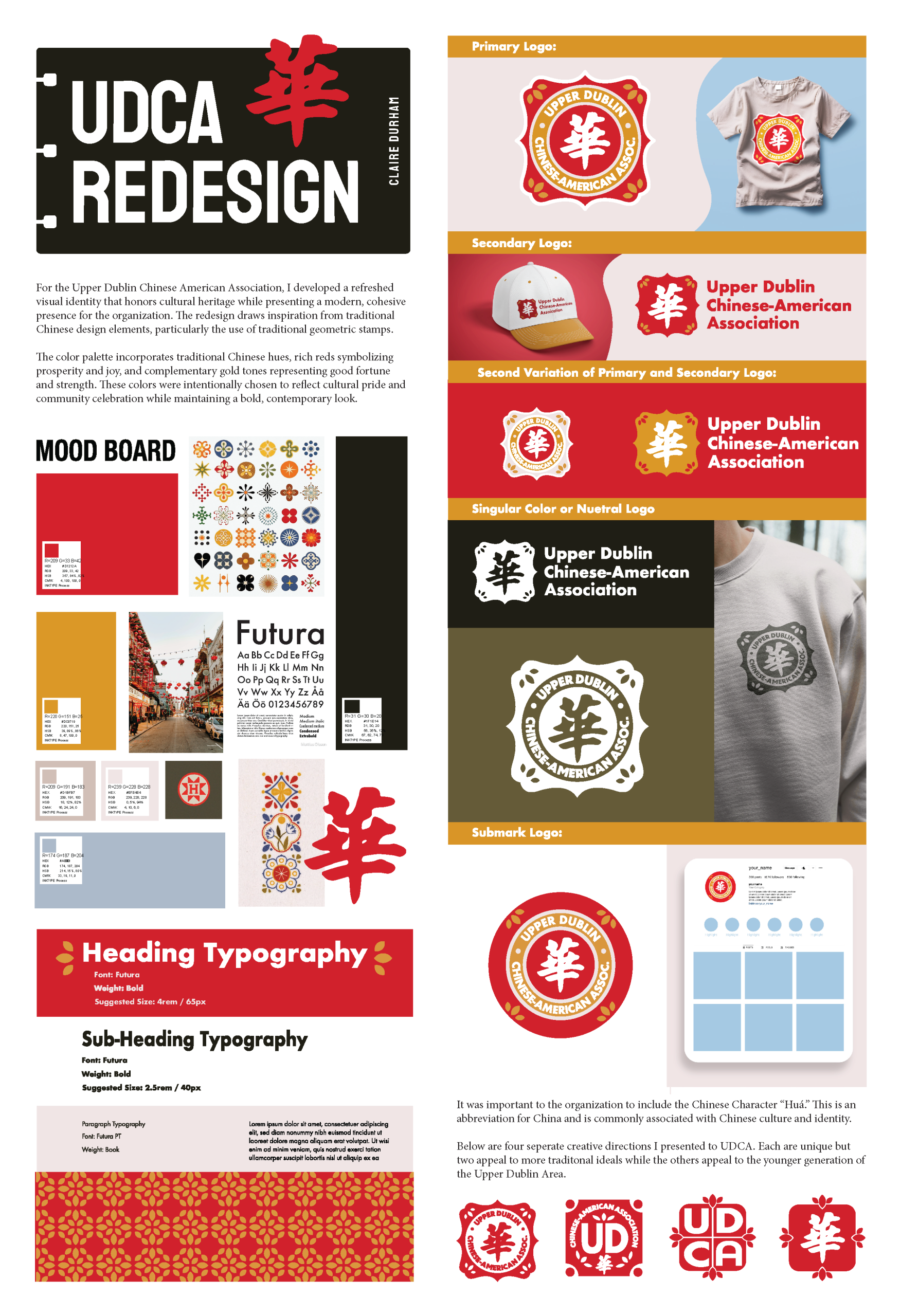
Branding teaches students to build cohesive visual identities alongside the verbal and narrative scaffolding that gives them meaning. Logo systems, pitch decks, and launch materials are presented in agency-style creative reviews. I hold students to professional standards for visual systems and typographic clarity, mentoring them through ideation, iteration, and launch-ready presentation. The goal is graduates who can not only design a brand but also defend it, position it, and present it to a client.

SAMPLE BRIEF:
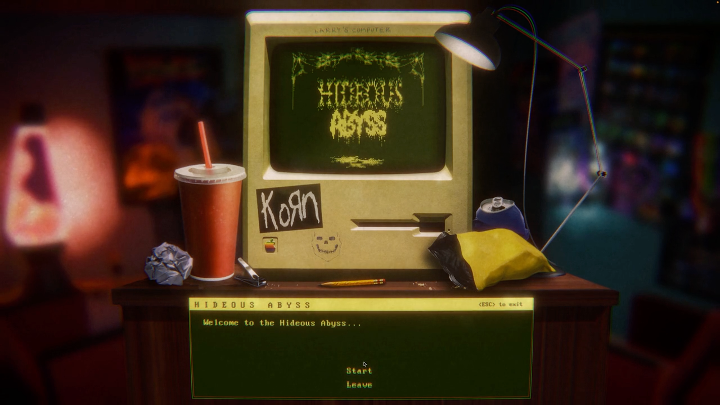
“Your favorite, not so known, band is looking for a design team, and you’re on their short list! They need a new, contemporary identity and have decided to hire you to present them a re-branding pitch campaign. BUT- the competition is high, and you’re going up against other world class designers. Show the band that you understand their music, their story, and how to gain new audiences. Using a deck, create a narrative arc that introduces the world to this (not-so) new band. At the end of your deck, the band would like you to include a gig poster design for their next upcoming (or their previous) show.“

SPECIAL TOPICS
I have designed and developed special topics courses that expand my department’s curricular offerings into new media, new methodologies, and new geographies. Each course was built from scratch, from syllabus, to assignments, and learning outcomes. Several have since been adopted as recurring offerings.
Game Design & Development
Students worked in groups to develop interactive narratives, then built 2D side-scrollers that put illustration and game mechanics in service of story. The course emphasizes narrative-first game design and students learn to use mechanics as visual storytelling tools. After three successful runs, the course was adopted as a regular departmental offering, and I presented the curriculum at the IndieCade Horizon Summit.
Information Design
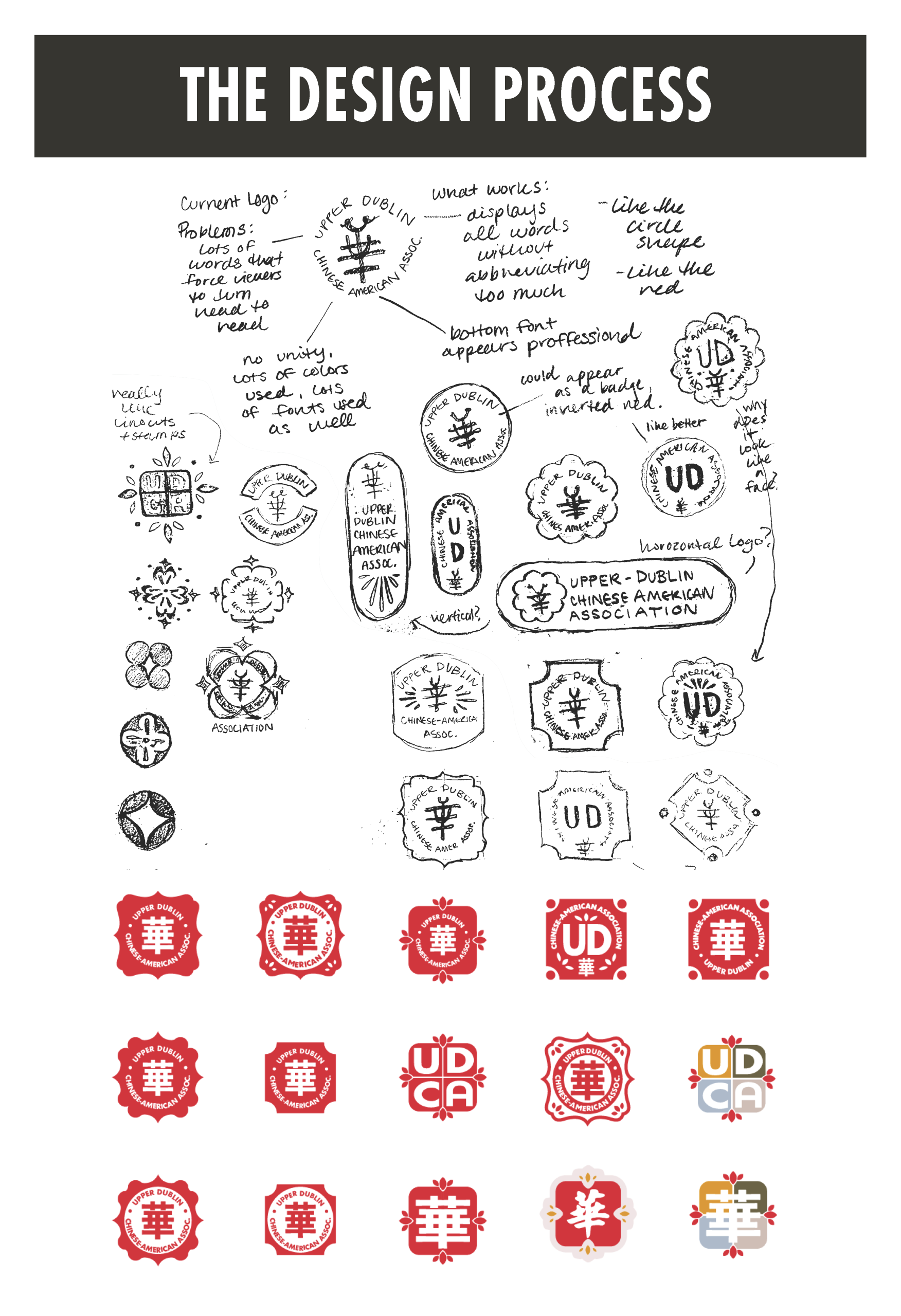
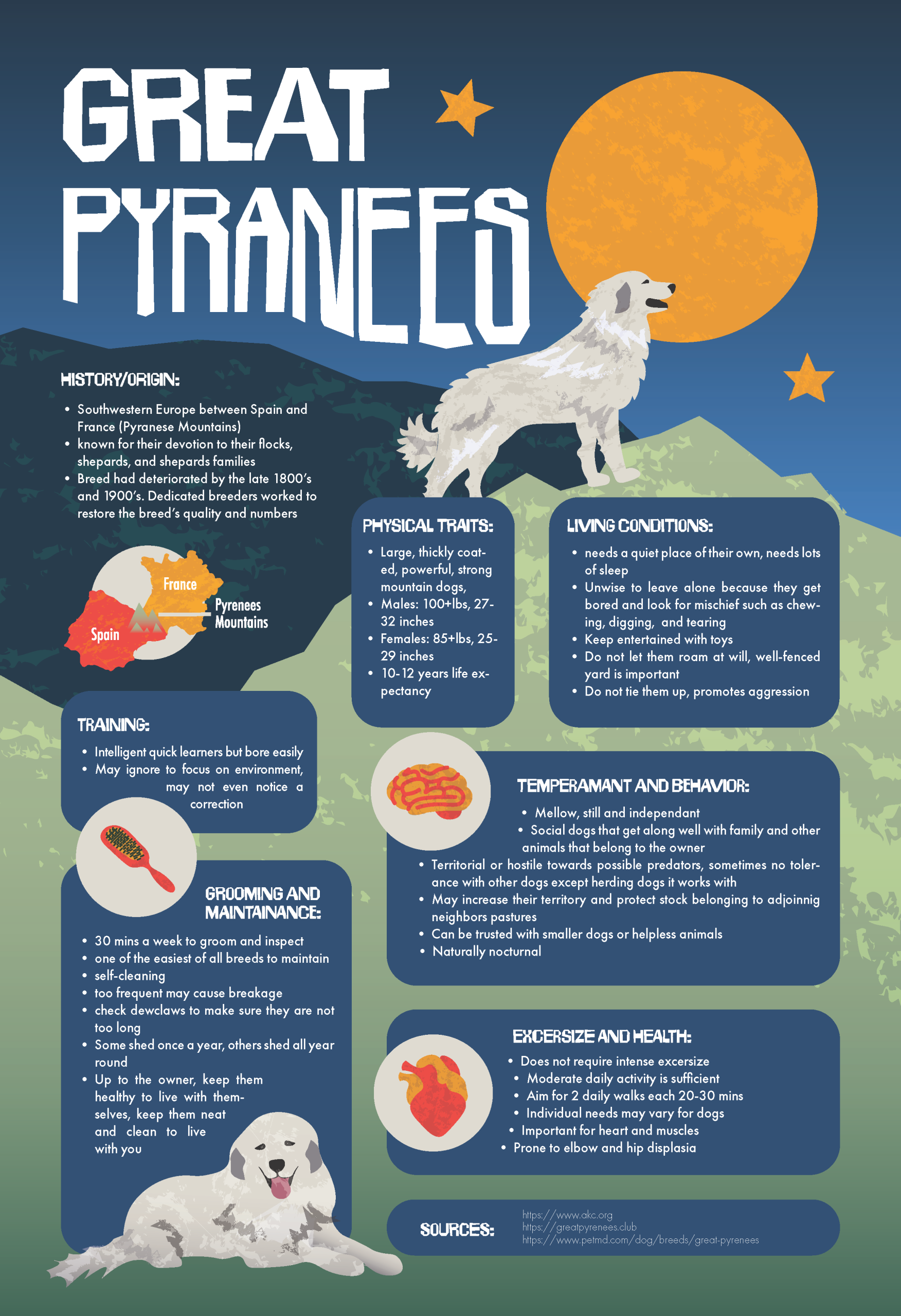
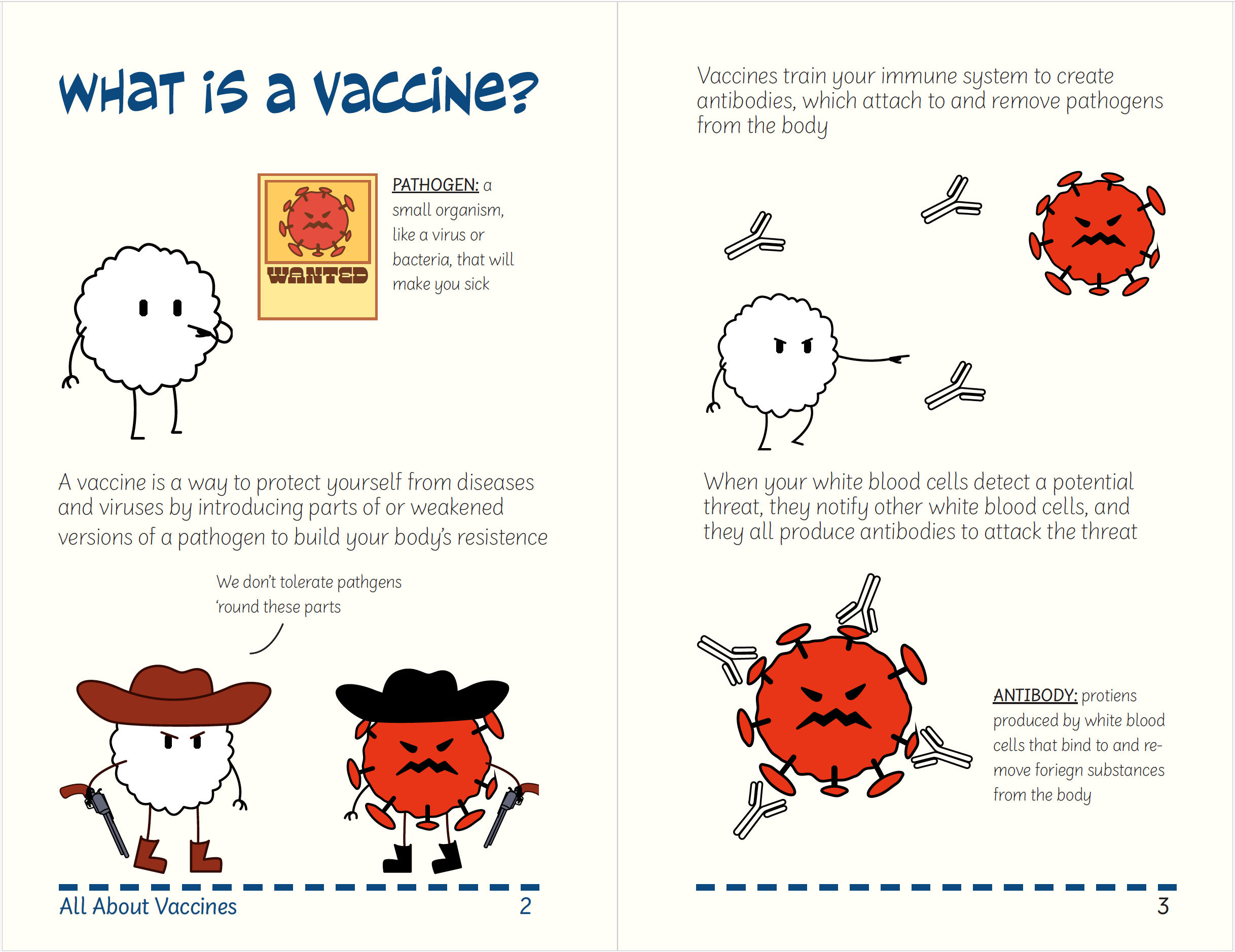
This course was built around three escalating projects that teach students to handle layout, modular grid systems, advanced typography, and illustration/graphics in service of complex, data-rich information. The sequence begins with an animal species breed explainer (foundational structure), moves through a comparative exercise infographic (data visualization and visual argument), and culminates in a comparative vaccine booklet (long-form information design across spreads). Each project builds the next: students learn to scaffold complexity, integrate research with visual hierarchy, and treat layout itself as a tool for thinking.
Tokyo Travel Study
A travel-study course open to both majors and non-majors, conducted over Spring Break in Tokyo. Students studied the history of Japanese graphic novels, manga, animation, anime, and graphic design from the post-WWII period; and examined how Japanese national identity has been mediated through these forms. The course pairs immersive cultural study with studio work: students develop a visual narrative exploring an aspect of their own identity, using the frameworks they encountered abroad as both reference and provocation.
ACADEMIC SERVICE
La Salle University
- Summer Grants Committee, 2023–Present
- Standards II Ethics and Integrity Committee, 2023–2025
- Academic Advisor, 2022–Present
- Recruitment Committee, 2022–Present
- DART End-of-Semester Exhibition, Organizer, 2022–Present
- Core Institution Learning Outcome Assessment, Faculty Pilot, 2022–Present
- Open Education Resources Summer Institute, Member, 2023
- New Faculty Learning Community, Member, 2022–2023
- Additional faculty volunteer roles across recruitment and admissions events
Kutztown University
- BFA Recruitment Committee, 2019–2020
- College of Visual and Performing Arts (CVPA) Open House Portfolio Reviewer, 2018–2020
- Designathon Faculty Advisor, 2019–2020
- CVPA Faculty Mentoring Program, Member, 2018–2020
Professional/Field
- Education Director, AIGA Philadelphia, 2023–Present
- MCCC (Montgomery County Community College) Fine Arts Advisory Committee, 2026–Present
- Manayunk Arts Collective (MAC), 2026–Present
- Council on Undergraduate Research (CUR) Reviewer, 2019–2020